
Dieffenbachia
10 plants
- UK prices
- No Verified prices yet
10 plants
| Compare | Illustration | Plant | UK sales on record | Price |
|---|---|---|---|---|
| Dieffenbachia seguine 'Camilla'Camilla Dumb CaneLast sold 28 Aug 2026, another size 14 Oct 2026 | £15Limited data | |||
| Dieffenbachia seguineDumb CaneLast sold 11 Jul 2026 | £10Limited data | |||
| Dieffenbachia 'Reflector'Reflector Dumb CaneLast sold 25 Jun 2026, another size 21 Jul 2026 | £13Limited data | |||
| Dieffenbachia 'Crocodile'Crocodile Dumb CaneLast sold 17 Jun 2026, another size 16 Jul 2026 | £6Limited data | |||
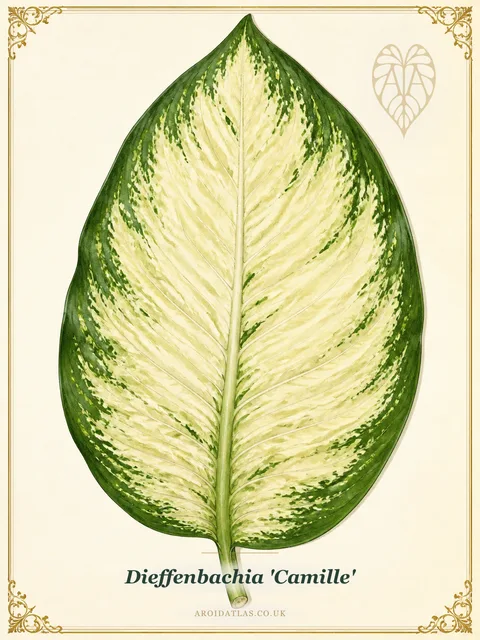
| Dieffenbachia 'Camille'Camille Dumb Cane17cm pot, last sold 28 Jun 2026 | £28Limited data | |||
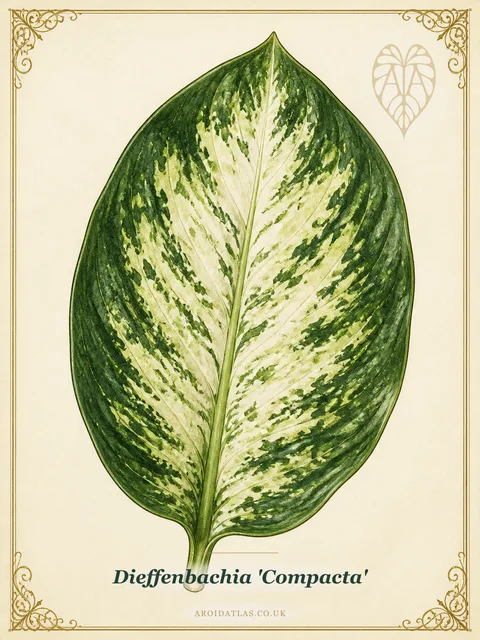
| Dieffenbachia 'Compacta'Compacta Dumb CaneLast sold 4 Sep 2026 | £6Limited data | |||
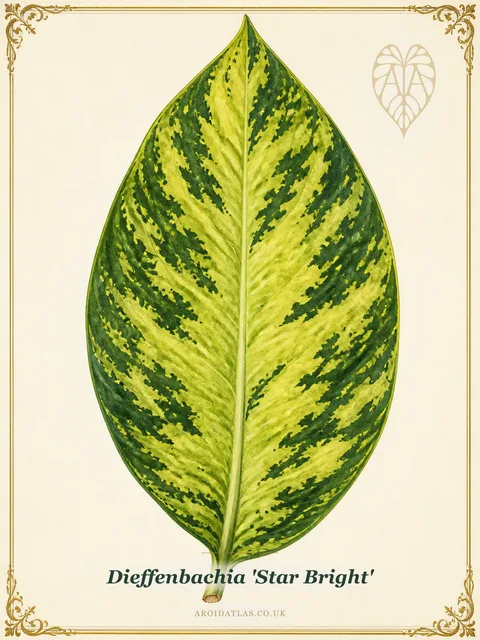
| Dieffenbachia 'Star Bright'Star Bright Dumb CaneNo UK sales recorded yet | £5 to £25Estimate | |||
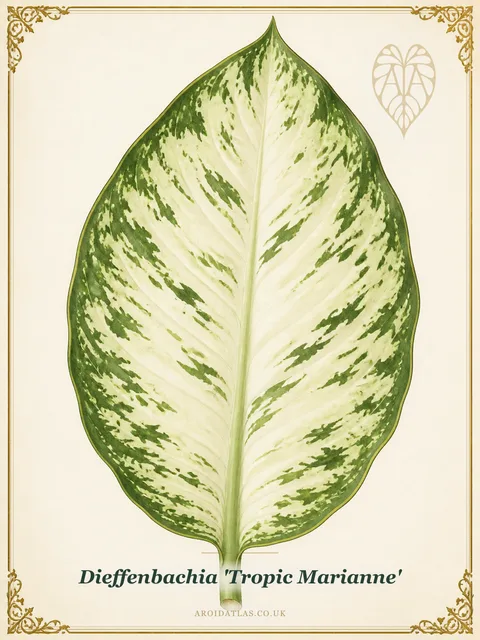
| Dieffenbachia 'Tropic Marianne'Tropic Marianne Dumb CaneNo UK sales recorded yet | £5 to £25Estimate | |||
| Dieffenbachia 'Tropic Snow'Tropic Snow Dumb CaneNo UK sales recorded yet | £5 to £25Estimate | |||
| Dieffenbachia seguine 'Camouflage'Camouflage Dumb CaneNo UK sales recorded yet | £5 to £25Estimate |
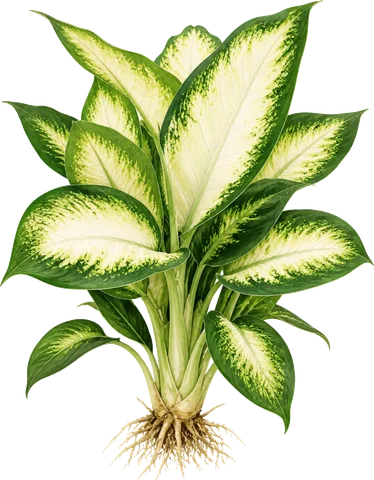
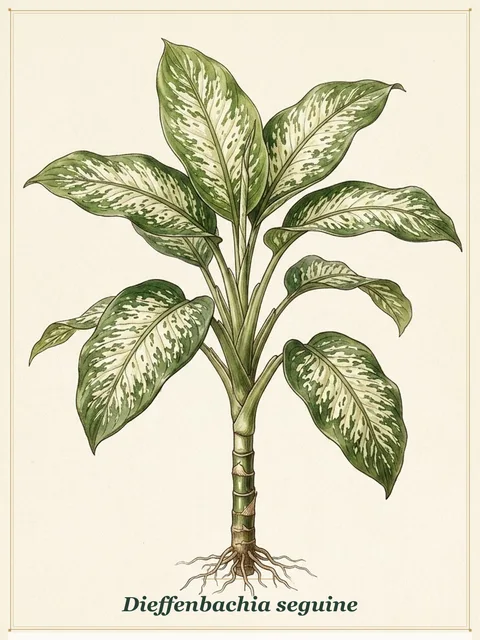
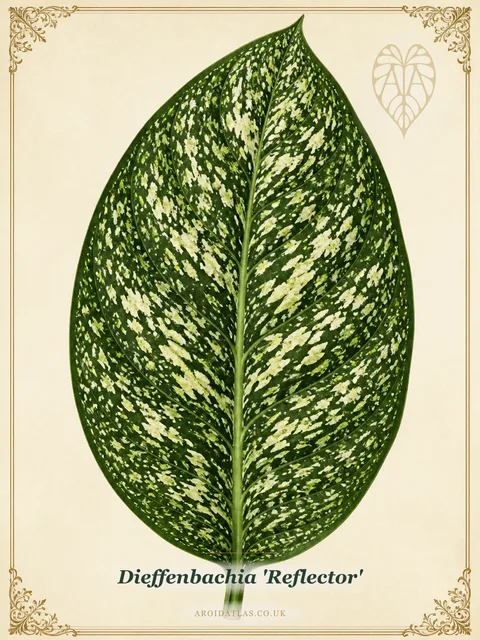
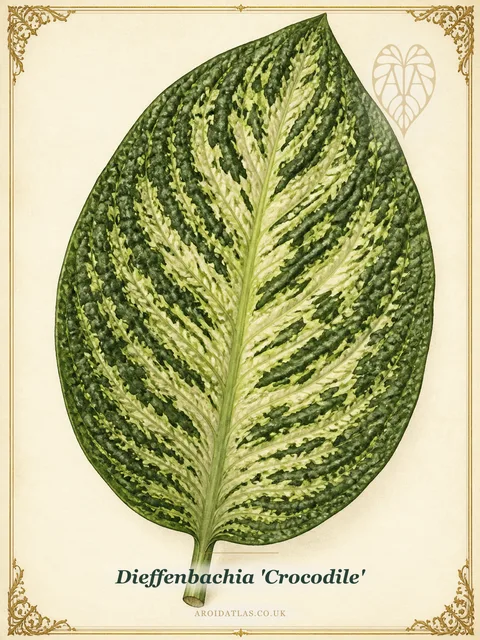
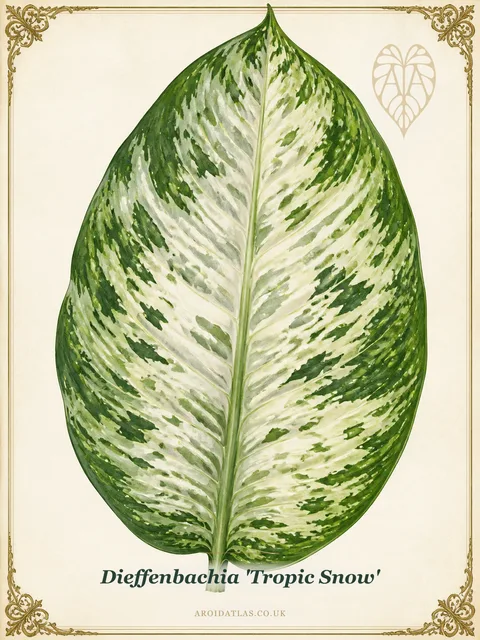
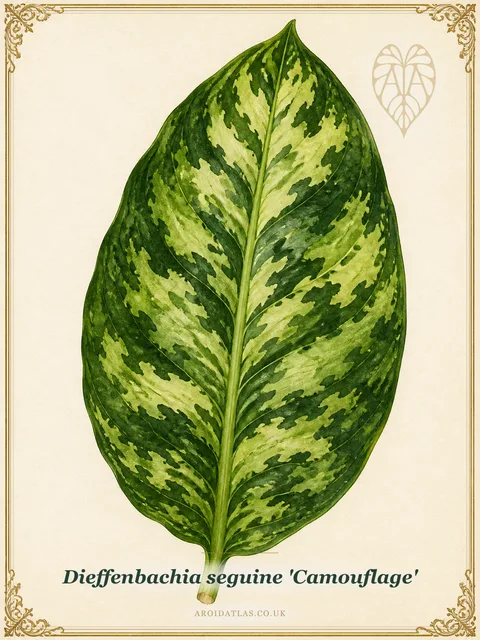
About Dieffenbachia
Dieffenbachia is a Central and South American genus of broad-leaved aroids long grown as houseplants for cream-and-green mottled foliage, named for German botanist Joseph Dieffenbach. Most named cultivars (Camille, Tropic Snow, Reflector) are commercial hybrids bred for pattern density, while D. seguine and its cultivars represent the genus's wild species side.
Care notes
- All Dieffenbachia sap contains calcium oxalate crystals that irritate skin and mouth tissue; handle cuttings and pruning with care, and keep away from pets and children who might chew a leaf.
- Heavily cream/white cultivars (Tropic Snow, Tropic Marianne) have less chlorophyll-bearing tissue than greener forms and generally grow slower, needing bright, indirect light to avoid weak, leggy growth.
- Older Dieffenbachia naturally lose lower leaves as the cane grows taller, a bare lower stem is normal growth habit, not decline, and can be cut back and re-rooted to restart a fuller plant.